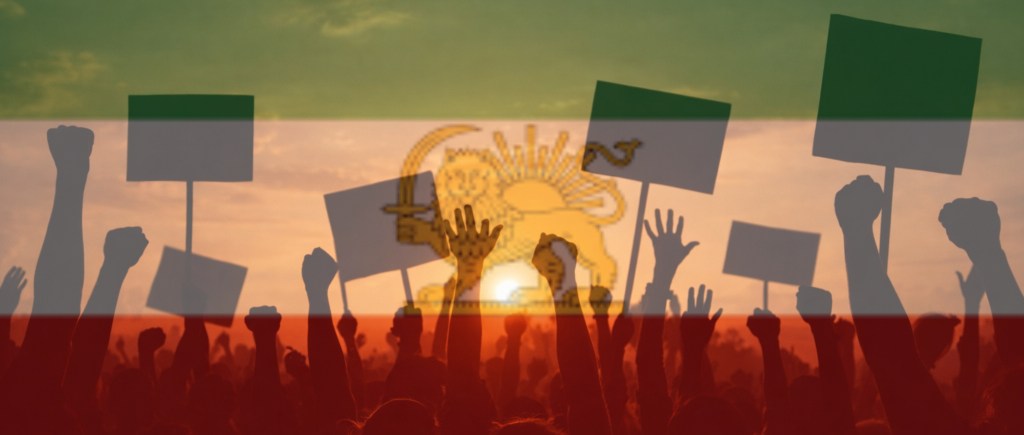
Over the past year a striking number of Iranians, especially women and young people, have been saying the same thing, over and over:
We are not Islamic. We are not Muslim. We want to overthrow the Islamic State that rules us.
This sits uncomfortably in a Western political moment where many advocates, particularly on the left, have spent years insisting that criticism of Islam is inherently racist, that Sharia law is misunderstood, and that political Islam must be defended as part of anti-imperialist solidarity.
At the same time, Islamophobia and anti-immigration movements are rising – sometimes in cahoots with Nazis – and the two conversations have collapsed into one. Critique of Islamic authoritarianism is conflated with hatred of Muslims. Immigration policy is conflated with racism. Listening has become impossible.
The result is polarisation. Rigid camps on either side, screaming too loud to actually hear a damn thing – and in many cases spilling into outright denial, with Iran’s uprising dismissed as merely a Western or Mossad-engineered plot rather than recognising a genuine revolt against decades of escalating tyranny. The reality is simpler, less comfortable but more honest: it can be both, and one does not cancel out the other.
This article is an attempt to untangle that mess and to centre the people most often ignored in it: Iranians themselves.
When Iranians say it’s a misconception that they are “mostly Muslim,” they are not denying Islam’s history in Iran. They are describing life under state-mandated religious identity, where belief is not freely chosen.
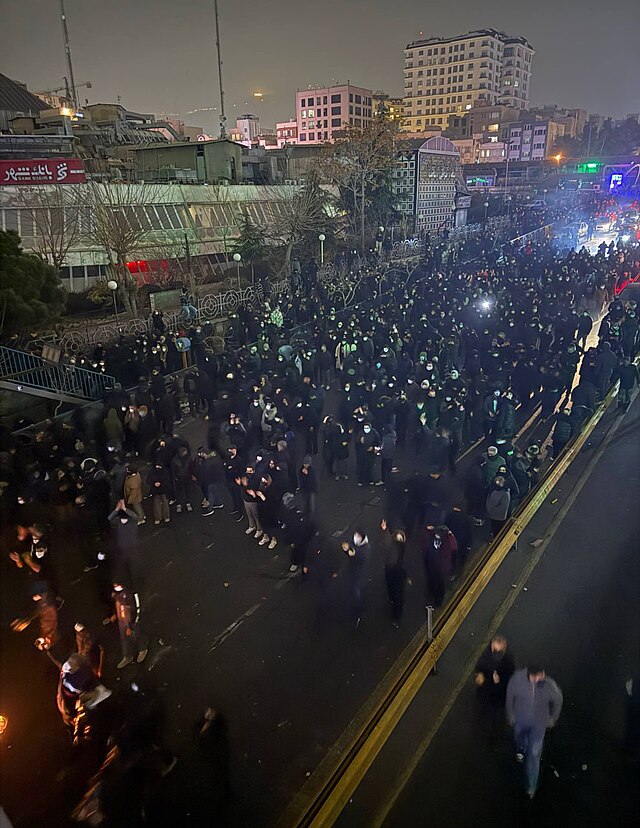
Independent data sharply contradicts Iranian government claims about religious affiliation. Under the Islamic Republic religion is not private, it is a legal status. Shi’a Islam is constitutionally enforced, irreligion is unsafe to declare, and leaving Islam can be punished. When Iranians reject the label “mostly Muslim,” they are not necessarily making a theological claim.
This matters because for people who have lived under Sharia as state law, the issue is not just theology – it is coercion, punishment, and control enforced through violence.
Iran did not naturally drift into theocracy. It had strong secular, socialist, feminist, and democratic movements throughout the 20th century, beginning with the 1906 Constitutional Revolution. But those movements were crushed by foreign interference and authoritarian rule.
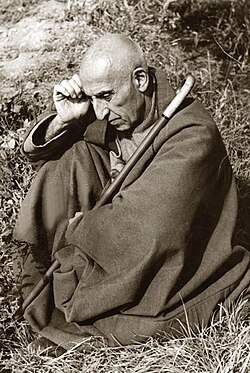
In 1953, the US and UK overthrew Iran’s democratically elected prime minister after he nationalised oil. Decades of dictatorship followed.
By the 1970s, political parties, unions, and leftist movements were destroyed. Mosques were among the only spaces left where dissent could survive – so religion became a vehicle for survival, not necessarily faith (sound familiar to some of those with Irish Catholic heritage?)
Political Islam did not rise because Iranians were uniquely religious. It rose because every other path to opposition had been closed.
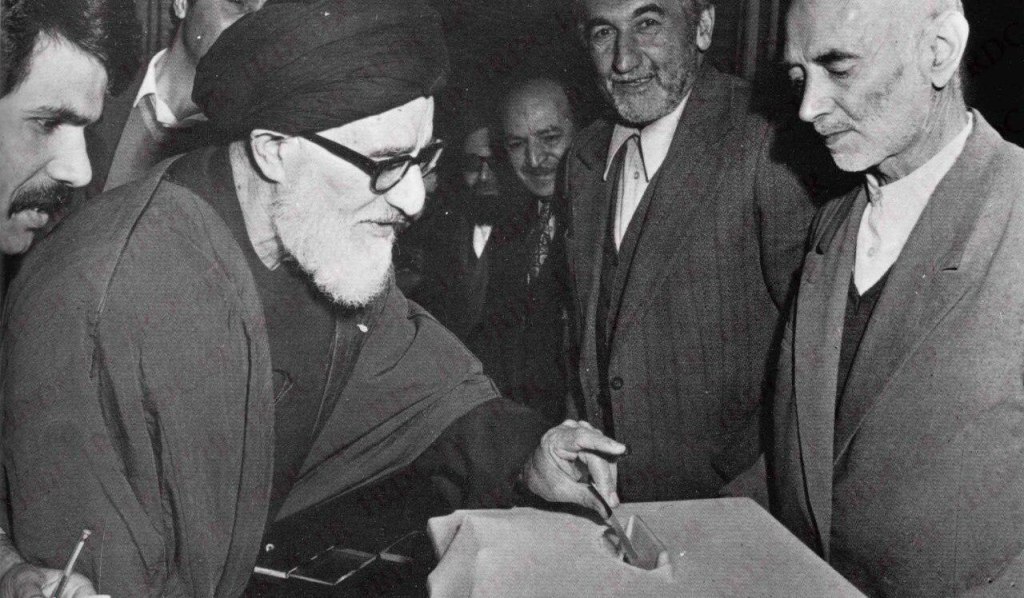
The 1979 revolution was a mass uprising against dictatorship. The Iranian people did not vote for the lives they now live. They voted to end a tyranny, and watched another replace it.
For many Western progressives, the difficulty in engaging honestly with Iran is not ignorance – it is protective instinct.
After decades of Islamophobia, war, and racialised violence, anti-racism became a reflex. Post-9/11 backlash created a justified fear of empowering bigots and increase racist violent attacks. Criticism of Islam, even when directed at state power, began to feel easily misconstrued – and there is also a genuine fear of giving bigots and racists any more oxygen.
The cost of this fear-to-criticise or to be perceived as ‘imperialist’ is not just paid for by online debates and fellow keyboard warriors. It is at a cost to those who cannot opt out of religious rule: women, queers, dissidents, minorities, and the irreligious living under theocratic states. Western discourse insists that political Islam must be defended from criticism, while Iranians risk their lives protesting an Islamic state.
This contradiction is striking when compared to how many of the same advocates insist, correctly, on distinguishing Jewish people from the State of Israel, even as governments attempt to conflate the two by claiming anti-semitism at all critique or protest of Israel’s crimes against humanity. Separating faith, identity, and state power is not foreign to progressive politics – it’s birthed from it. However, now we witness a selective distribution of it.
Conflicts are sorted into moral binaries: where the State of Israel is cast as the singular villain, and Hamas therefore must be framed by some, as a legitimate expression of resistance of the Gazan people, rather than a theocratic militant organisation that has also brutalised, held hostage, and controlled its own population.
Rhetoric that would once have been recognised as authoritarian or extremist propaganda is increasingly tolerated, even normalised, in left advocacy spaces, either naively or justified in language of inclusion or anti-imperialism. Meanwhile, governments respond by going to the old how-to-control-dissidence toolbox and come back with oppressing freedom of speech and authoritarian tactics.
This is not an attack. It is an analysis of how good intentions, paired with good-guy/bad-guy or black-and-white thinking, can end up reproducing the very harm being opposed.
Anti-immigration protests are a symptom, not a solution
I don’t believe anti-immigration protests are the answer, and racism is never acceptable. However, dismissing these movements without understanding why they are growing guarantees their persistence.
Australian funny bugger–turned accidental political commentator Ozzy Man Reviews has become one of the few visible outlets covering the Australian solidarity movement.
In a Valentine’s Day reel from a Perth Protest, Ozzy Man posted with the caption:

and with his typical larrikin energy that we know and love, it was clear he wasn’t there to fuck spiders:
Other than listening to the Australian-Iranians he interviewed, what stood out for me is how he handled an anti-immigration comment with more nuance than I’ve seen from any elected official. He named Iran as a warning about how Islamic extremism consolidates power, without letting the conversation slide into racism or turning immigration into the scapegoat.
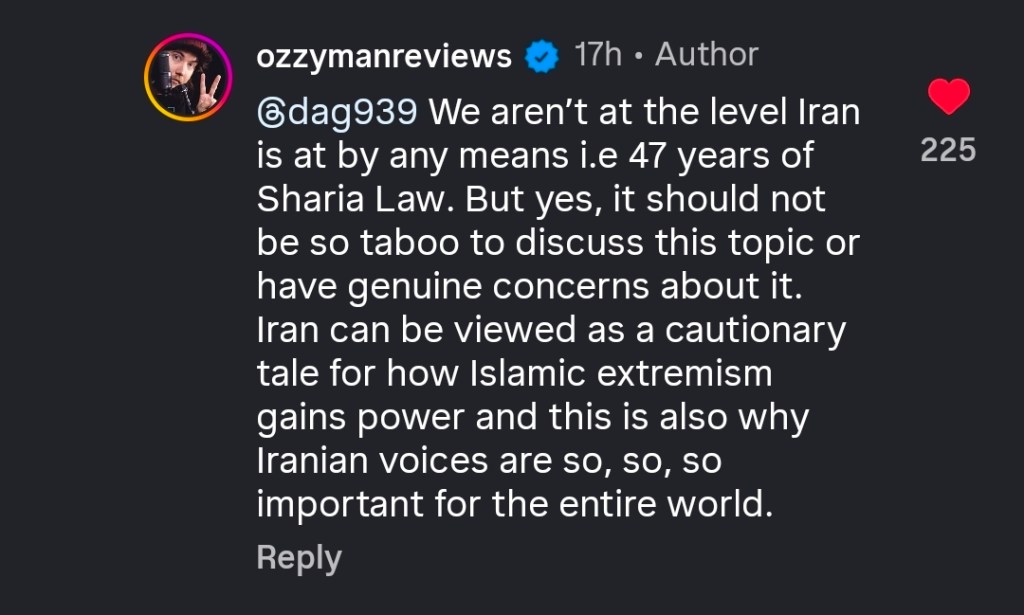
Across his comments, he doesn’t dismiss concerns. He doesn’t punch down. And he doesn’t let the thread spiral into anti-immigration nonsense or bad-faith accusations. That ability to hold the line without turning people into enemies is rare – and it matters.
Because when people feel socially policed into silence, the conversation doesn’t disappear.
When legitimate concerns about religious authoritarianism, women’s rights, or secular law are treated as inherently racist or bigoted, they don’t go away. They come back stripped of nuance, sharpened by resentment, and carried by people far less careful with language or intent. That’s how extreme voices fill the gap and gain power.
The issue is not immigration. The issue is whether liberal democracies are willing to defend basic protections: gender equality, secular education, freedom of belief and non-belief, and secular law.
These are not expressions of “Western supremacy.” They are hard-won safeguards. A multicultural society can welcome people without accepting religious authoritarianism.
Confusing the two helps no one. Worse, it turns people fleeing oppression into scapegoats, into the “problem”, while ignoring the reality that those who have lived under violence do not instantly unlearn survival mode the moment they arrive somewhere safe.
The loudest voices insisting that any criticism of Islamic rule is racist are often the furthest from its consequences or they are naively (I hope) repeating the propaganda of those benefitting from it. If solidarity means anything it must begin with listening, especially when people are risking their lives to speak. Iranians are not asking the world to hate Muslims. They are asking for freedom from oppression. They are asking us to stop confusing faith with power, and silence with tolerance.
When everything is forced into black-and-white or good-and-bad categories, nuance dies and authoritarianism rushes in to fill the gap. This is how progressive societies regress into losing hard-won rights and legally embedded cultural-values in the name of freedom, democracy, social justice, or independence.
Iran didn’t choose tyranny in 1979. It chose to end one – and watched another take its place. That lesson is not ancient history.
 Delicate Feral – Bambi-Rose Woodward